A Dangerous Gap in NASA's Framework
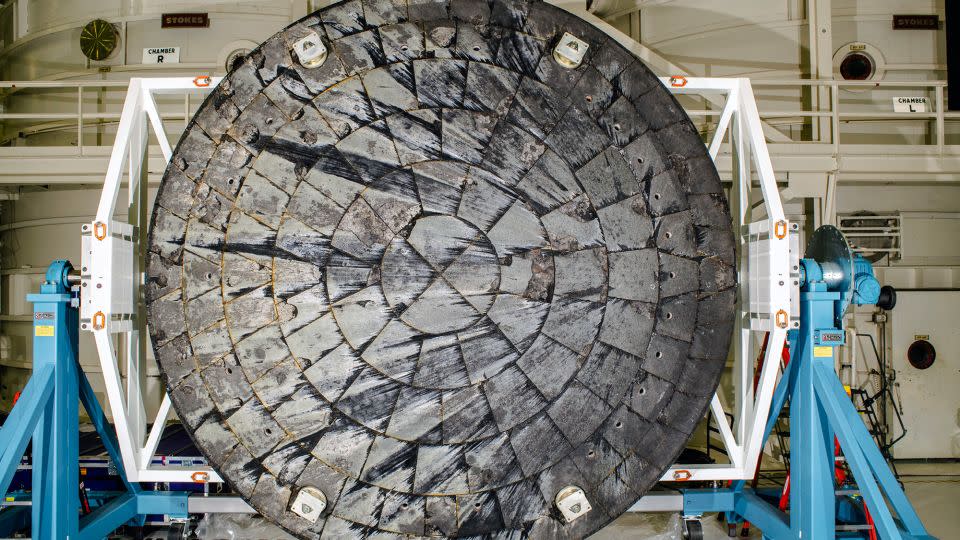
NASA must address several challenges to safely fly and return humans to the Moon. The most time-sensitive issue is preparing Artemis II for a planned 10-day mission that takes four astronauts on a lunar orbit.
Artemis I was an uncrewed lunar test flight launched in November 2022. NASA considered Artemis I to be a near-perfect flight, until recently. The Office of Inspector General's report on NASA's 2025 top challenges confirmed that Orion's heat shield did not perform as expected, having suffered widespread cracking and char loss. An independent review found that the heat shield did not properly vent the gases produced during reentry. NASA intends to reuse the heat shield design on Artemis II while flying a modified reentry trajectory. The approach is technically complex and relies on a test campaign that resulted in cascading delays to all Artemis missions.
I am not an expert in heat shield design and I do not wish to comment on the merits of various design options and ablative coatings. In this blog article, I would like to share my concerns about a dangerous gap emerging in NASA's decision making framework. Specifically, I need to highlight a very concerning historical pattern in how NASA treats anomalies as "routine" before missions launch, reclassify anomalies as "non-critical" after launch, and later discover that some of those anomalies were a result of "systemic failures" with a potential for "catastrophic" outcomes.
Timeline
History shows that this is not a new or random issue at NASA. The agency has treated minor heat shield problems as "routine" to meet launch windows and program deadlines over many decades:
- Apollo program: Early heat shield testing revealed ablation patterns that were different from engineering models and predictions at the time. The combination of a honeycomb structure underlayer and the Avcoat ablative coating was a result of many iterations during the development program.
- Space Shuttle program: NASA repeatedly ignored foam debris anomalies during Shuttle launches until the 2003 Columbia disaster. More recently, insider accounts confirmed that NASA had struggled with properly managing the risk of heat shield tile damage until the retirement of the remaining Shuttle fleet.
- Artemis I: In 2009, NASA decided to replace the Apollo era honeycomb design with easier-to-manufacture heat shield blocks, covered by a more environmentally-friendly Avcoat compound. Testing heat shield performance was a primary objective of the Artemis I mission. Post-flight inspections found unexpected and widespread damage, including chunks missing, compromising heat shield integrity. Thermal test campaigns indicate that inadequate material uniformity and permeability were the main contributing factors leading to the safety issue.
Decisions by NASA
In accordance with program milestones, the Artemis II heat shield was built prior to launching Artemis I. According to subject matter experts, the heat shield blocks installed on the Artemis II Orion capsule have "less permeability" than those on Artemis I.
Starting with Artemis III, NASA is producing future Orion heat shields with more consistent blocks and an improved Avcoat compound. It is expected that greater material uniformity and permeability will prevent the widespread damage patterns revealed by the Artemis I test flight.
In December 2024, NASA senior leadership publicly shared its decision to fly the Artemis II crew using the existing heat shield, relying on a modified atmospheric reentry profile as an operational risk mitigation measure. According to the NASA Administrator, these measures "strengthen long-term system robustness while ensuring near-term missions proceed safely".
Why It Matters Now
The real risk is not NASA's decision to proceed with launching Artemis II, but launching it as a crewed test flight mission. I am afraid NASA is repeating the mistakes of the past in using the same decision framework that treats anomalies as "routine".
For Artemis II, the critical system safety question is not whether heat shield anomalies will be discovered post-flight. In terms of safety, that would be a positive outcome. The critical safety question we need to answer is this: how can NASA senior leadership declare unexpected heat shield anomalies "non-critical" for a crewed mission when the previous uncrewed test flight failed the primary objective of demonstrating heat shield safety objectives?
NASA claims to follow a risk-informed approach that involves testing to learn, analyze, mitigate risk, and incorporate lessons into subsequent flights. As a safety expert, I am compelled to highlight that the decision to launch Artemis II as a crewed mission translates to an elevated safety risk and fails to incorporate lessons learnt. This creates a dangerous gap in NASA's framework.